Product Description
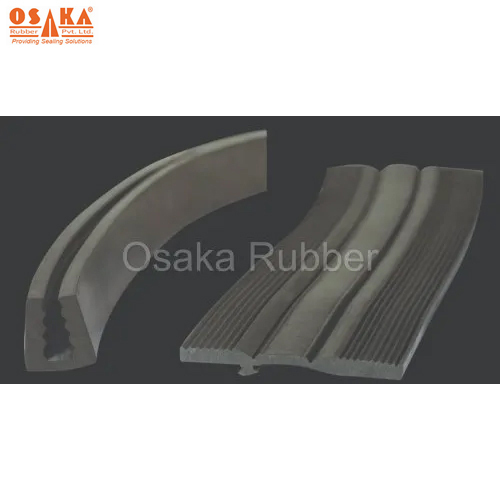
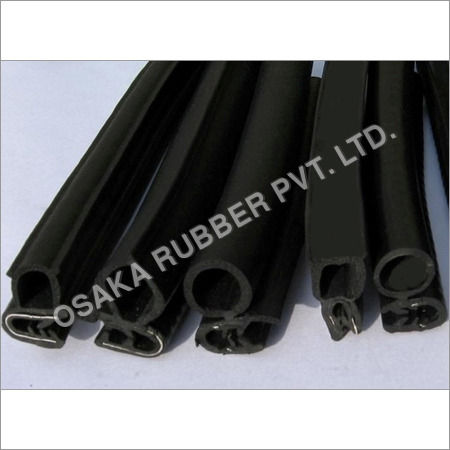
The rubber market is experiencing good growth these days. Neoprene rubber profiles are made using synthetic rubber, which is highly resistant to oil and environmental conditions. The profiles have good tensile strength and are employed in a broad range of industrial applications. They are heavily demanded in various sectors, such as automotive and construction. The proffered neoprene rubber profiles have significant features, such as sound attenuation properties. They are specifically designed to adhere to individual requirements.
Specification
|
Material
|
Neoprene Rubber
|
|
Color
|
Black
|
|
Packaging Type
|
Box
|
|
Brand
|
Osaka
|
|
Usage/Application
|
Automobile
|
|
Hardness
|
10-20 Shore A
|
|
Length
|
10 m
|
Superior Weather and Ozone ResistanceNeoprene Rubber Profiles deliver excellent performance under harsh weather conditions, exhibiting high resistance to UV rays, ozone, and solvents. This makes them suitable for demanding outdoor applications including automotive seals and window weatherproofing, ensuring long-lasting protection and reliability.
Customized Sizing and Versatile InstallationThese profiles can be tailored in width (5 mm to 80 mm), thickness (2 mm to 15 mm), and length (1 m, 2 m, or as specified) to meet unique application needs. Installation methods include press-fit, adhesive, or mechanical fastening, providing flexibility and ease during setup across various industries.
FAQ's of Neoprene Rubber Profiles:
Q: How are neoprene rubber profiles installed for sealing applications?
A: Neoprene rubber profiles can be installed using press-fit, adhesive bonding, or mechanical fastening, making the process efficient and suitable for a range of applications including door and window sealing, as well as industrial gasketing.
Q: What environments are suitable for using neoprene rubber profiles?
A: These profiles are ideal for both indoor and outdoor use, thanks to their high resistance to weathering, UV, ozone, oil, and a broad temperature tolerance from -35C to +120C, making them perfect for automotive, industrial, and electrical enclosure applications.
Q: When should I choose the electrically conductive neoprene option?
A: The electrically conductive variant should be selected for applications requiring static dissipation or EMI shielding, such as in electrical enclosures. This option is available upon request during the ordering process.
Q: Where can I use neoprene rubber profiles in industrial settings?
A: They are commonly used in door and window sealing, weatherproofing, industrial gasket fabrication, automotive seals, and electrical enclosure protection, due to their versatility and resistance properties.
Q: What benefits do neoprene rubber profiles offer over standard rubber profiles?
A: Neoprene profiles provide superior weather, ozone, and UV resistance, a self-extinguishing flame rating, lower water absorption, and maintain flexibility and durability across a wide temperature range, ensuring long service life.
Q: How should neoprene profiles be stored to ensure maximum shelf life?
A: Store them in a cool, dry place, away from direct sunlight. Following these guidelines allows for a shelf life of up to 36 months without compromising performance.





 Send Inquiry


 Send Inquiry
 Send SMS
 Call Me Free
 English
 Spanish
 French
 German
 Italian
 Chinese (Simplified)
 Japanese
 Korean
 Arabic
 Portuguese