Product Description
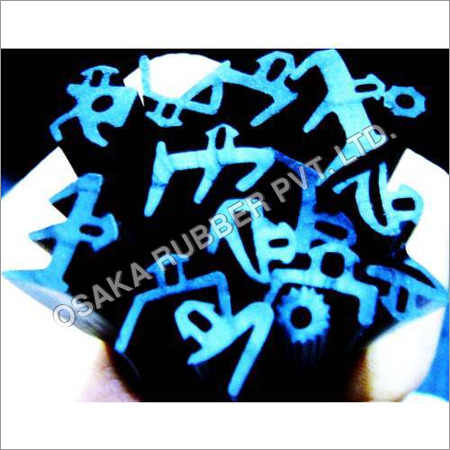
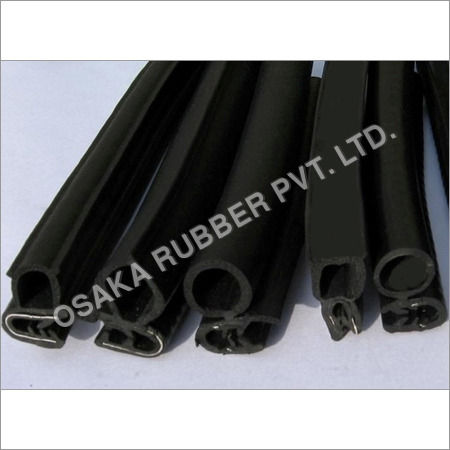
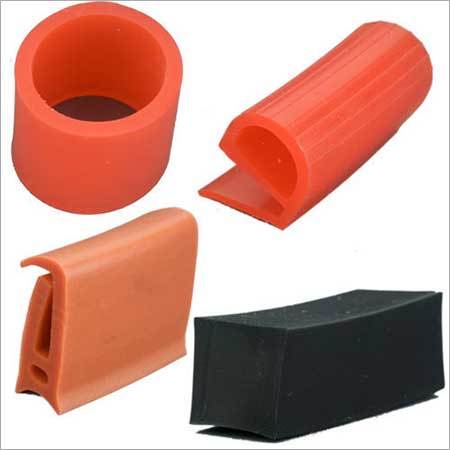
Our reputation in the market is largely attributable to our precision-designed Architectural Building Rubber Profiles from our extensive collection of products.The provided rubber profile is made with optimum quality silicone rubber as per to the quality parameters. Our offered product is tested on various quality standards to make sure its flawlessness. Along with that, our customers can avail this Architectural Building Rubber Profiles from us at nominal rates and given time frames.
Features:
- High tolerance power
- Durability
- Ozone resistance
- Easy to fix
Further Details:
Within the aluminum made frames the glass panes have a compact grip in modern days Building construction, the profiles for sealing entirely prevent wind, dust and water. Very long exposure to harsh conditions pf climate has zero impact on the structural characteristics of the profile
Versatile and Customizable SolutionsThese rubber profiles are available in a range of materials such as EPDM, Natural Rubber, Silicone, and Neoprene, and can be customized in terms of size, width (10 mm to 150 mm), and length to meet specific architectural needs. Customers can submit their own designs or drawings for tailored solutions, allowing great flexibility in product application.
Durability and Compliance AssuredThe profiles are crafted to withstand harsh environmental factors, boasting excellent UV, ozone, chemical, and weather resistance. Stringent quality controls ensure compliance with international standards such as ASTM C864, ISO, and BS. Shelf life reaches up to 5 years under optimal storage, and flame-retardant grades are available when required.
Simple and Reliable Installation MethodsThese profiles are engineered for easy installation using adhesives, mechanical fixings, or slot-fit methods. Supplied as coils, rolls, or cut-to-size components, each profile offers high compressibility and superior sealing capabilities, which make them the preferred choice for both new construction and renovation projects.
FAQs of Architectural Rubber Profiles:
Q: How are Architectural Rubber Profiles installed?
A: The profiles can be installed using adhesives, mechanical fixings, or by slot-fitting. This flexibility ensures compatibility with a wide variety of architectural assemblies such as windows, doors, and facades. The profiles are supplied in coils, rolls, or cut-to-size pieces for easy handling during installation.
Q: What are the main benefits of using these rubber profiles in building projects?
A: Key benefits include excellent weatherproofing, high UV and ozone resistance, superior chemical and thermal stability, and reliable sealing for insulation, protection, and damping. Their flexibility also allows for easy customization to fit diverse architectural designs.
Q: When should I consider custom ordering rubber profiles?
A: Custom orders are ideal when your project requires unique shapes, sizes, or material specifications. Whether you need specific widths, thicknesses, or co-extruded components, the manufacturer can create profiles based on your own designs or engineering drawings.
Q: Where can these profiles be effectively used?
A: These profiles are suitable for use in windows, doors, curtain walls, structurally-glazed facades, and other architectural building systems where reliable sealing, insulation, and protection from the elements are crucial.
Q: What materials are available and which should I choose for my application?
A: Depending on your projects environmental demands, you can select from EPDM, Natural Rubber, Silicone, or Neoprene. EPDM is recommended for superior ozone and UV resistance; Silicone is preferred for higher temperature applications up to +200C; other materials can be chosen as per chemical resistance or mechanical requirements.
Q: How does the product comply with international standards?
A: The architectural rubber profiles conform to ASTM C864, ISO, and BS specifications, ensuring rigorous mechanical and chemical performance benchmarks including hardness, tensile strength, resistance levels, and dimensional tolerance.
Q: What is the projected lifespan and storage method for these profiles?
A: When stored in ideal conditions, architectural rubber profiles have a shelf life of up to 5 years. It is recommended to keep them in a cool, dry place away from direct sunlight to maximize longevity and retain their mechanical properties.





 Send Inquiry


 Send Inquiry
 Send SMS
 Call Me Free
 English
 Spanish
 French
 German
 Italian
 Chinese (Simplified)
 Japanese
 Korean
 Arabic
 Portuguese