Product Description
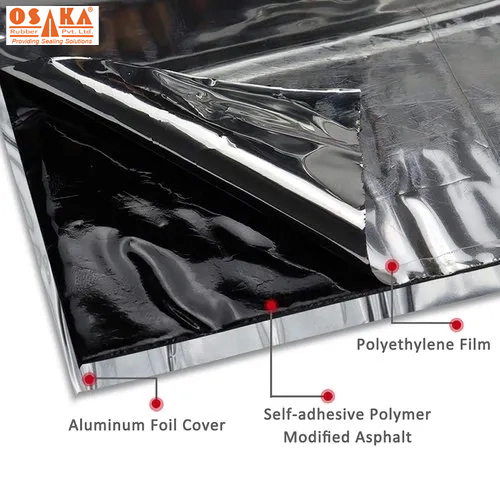
Bitumen is among the most commonly used raw materials for the construction of roofing membranes. Bitumen roofing membrane is an engineer's choice for waterproofing roofing solutions for buildings and other foundations. It is a black-coloured semi-solid, which is considered best for the manufacturing of basements and waterproofed bridges. It is light in weight, so working with such a roofing membrane is comfortable. It is accessible at a budget-friendly cost. Customers are fully satisfied with the quality of these roofing products.
Specification
|
Roll Length
|
as per requirement
|
|
Material
|
Bitumen
|
|
Color
|
Black
|
|
Weight
|
as per requirement
|
|
Brand
|
Osaka
|
|
Usage/Application
|
Industrial
|
Reliable Protection for Waterproofing NeedsOur bituminous roofing membranes provide robust waterproofing for various structures, ensuring your buildings are protected from water ingress, UV exposure, and harsh weather conditions. With options for both torch-applied and self-adhesive installation, they offer flexibility for different site and climate requirements.
Versatile Surface and Reinforcement ChoicesChoose from a range of surface finishes, including sanded, PE film, mineral slate, or aluminum foil, to suit your specific application. Reinforcement types-polyester or fiberglass-cater to varying demands for elongation, tensile strength, and puncture resistance, supporting both commercial and residential projects.
FAQ's of Bituminous Roofing Membrane:
Q: How is the bituminous roofing membrane installed?
A: Bituminous roofing membranes can be installed using either a torch-applied method or by self-adhesive application, depending on the selected product type. Installation should follow manufacturer guidelines to ensure proper adhesion and long-term performance.
Q: What surface finishes are available for this membrane?
A: The membrane comes in a choice of sanded, PE film, mineral slate, or aluminum foil finishes, allowing users to select the most suitable option for environmental and structural requirements.
Q: When should I use polyester versus fiberglass reinforcement?
A: Polyester reinforcement is recommended when high elongation and tensile strength are required, making it ideal for roofs subject to structural movement. Fiberglass is suitable for projects needing dimensional stability and puncture resistance.
Q: Where can this membrane be applied?
A: These membranes are designed for use on flat or sloped roofs in residential, commercial, and industrial buildings. They are also effective as a waterproofing layer in basements and foundations.
Q: What process should be followed for storage and shelf life?
A: Store rolls in a cool, dry place away from direct sunlight and extreme temperatures. With proper storage, the membrane retains its properties for 12-24 months.
Q: What are the main benefits of using this roofing membrane?
A: Key benefits include outstanding waterproofing, flexibility across wide temperature ranges, high puncture resistance, UV resistance, and customizable thickness for different project needs.



 Send Inquiry


 Send Inquiry
 Send SMS
 Call Me Free
 English
 Spanish
 French
 German
 Italian
 Chinese (Simplified)
 Japanese
 Korean
 Arabic
 Portuguese